|
room where they reign supreme; the military should take instruction from them! Wedemeyer was a cut above the average military man as well as most political leaders in his understanding of “Grand Strategy” and it could be a source of irritation to some. Wedemeyer observed that most military men as well as politicians had a limited view of what “strategy” meant in the context of war. At the German school he learned that effective strategy meant “employing all of a nation’s resources to accomplish objectives defined by National policy”. This concept was considerably broader than what was understood by most Western planners. To illustrate this, point Wedemeyer mentions the famous response of Winston Churchill, who when asked in Parliament early in the war on May 13, 1940 “What his strategy was” replied in that famous quotable phrase, to thunderous applause, “I can answer in one word: Victory—Victory at all costs.” This narrow objective, fails to take into account any post war problems.
Wedemeyer understood that there is a lot more to “Victory” than winning the war. The peace that follows is far more important. The lessons of the First World War were not lost on Wedemeyer. The 50 year “Cold War” following World War II is attributed by many historians to repeating the mistakes of World War I by failure to give adequate thought to post war problems during the fighting stage of the war. Wedemeyer was not guilty of this oversight. The menace of Communism was prominent in Wedemeyer’s mind during his entire career and affected his overall military strategy. This is something he learned at the German school and it continued to influence his thinking throughout his life. The threat of Bolshevikism was a major theme at the German school, and it made a deep and lasting impression on Wedemeyer.
The danger of Communism was not a concern that came to him late in his career as with many others, and it was a fear that remained with him his entire life. Indeed, when he wrote his “Victory Plan” a key point was the importance of the Allied Armies invading the heartland of Europe, reaching Poland and the Baltic countries before the Russians and denying them the opportunity to expand their territories. This was a very delicate point to articulate in his Victory Plan. As a military man he had to avoid highlighting this principal directly, as this was a “political subject”, which in a Democracy is considered by most to be beyond the scope of the military, and all conventional wisdom of American and British planners. That is why this idea, although not highlighted in his Victory Plan, was very clearly a vital component and if his plan was followed would have allowed the Allied armies to beat the Russians to the east and denied them the land grabs they acquired during and following the war. Wedemeyer was emphatic in his original plan that it was critical to invade France in 1943 while the Russians were occupied with the Germans, and the Atlantic Wall was not as strong as it was in 1944. If this plan was followed, Wedemeyer’s strategic concept to beat the Russians to Eastern Europe might have been accomplished.
Wedemeyer’s plan to invade France in 1943 with massive force ran directly contrary to the grand strategy envisioned by Churchill who considered himself a master strategist. Churchill is widely credited, but incorrectly, for being one of the first to rgcognize the menace of Communism. His famous Fulton College “Iron Curtain” headline grabbing speech delivered in 1946 was too little and too late. The Russians had already consolidated their land grabs and it was now clear that their totalitarian régime was just as pernicious if not more so than Hitler’s. Another illustration of Churchill’s inadequate understanding of overall strategy and how during the war he completely overlooked the lurking danger of Communism until it was too late is his response to the MacLean report to Churchill on the Communist threat in Yugoslavia. Brigadier Fitzroy MacLean was sent on a mission to Marshal Tito during the early years of the war and concluded that Tito and his followers were determined to establish a Communist regime with close links to Moscow as soon as the war was over. (Eastern Approaches) This information was given to Churchill who replied that no consideration of long term policy should deter MacLean from his task of “simply finding out who was killing the most Germans and suggesting means by which we could help them kill more.” He told MacLean to “Forget long-term policy” just kill Germans.[1] This is not the kind of response Wedemeyer would have made.
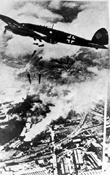
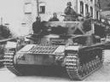
Upon his return to the United States, after his training at the German school, Wedemeyer wrote a comprehensive 100 page report of his experience, which detailed the enormous build up of the German war machine, stressing the new German concept of modern warfare, especially the use of armored divisions, airborne divisions, and antitank units, none of which the American Army had at this time. Additionally he summarized what he learned about anti-tank defense in an article he wrote in the Field Artillery Jounal (May 1941, and an article published in the Infantry Journal of May 1941, both of which articles were invaluable for training future tank officers. (An Unknown Future p. 10) As was the custom with such required reports, it was given wide circulation in the military establishment, but, like most “reports” put on the shelf by most recipients and largely ignored, except by one particular person, and happily that one person was the most important one to review the report, Brigadier General George Marshal, then Chief of the War Plans Division, and soon to be Chief of Staff. (An Unknown Future… p 11) Marshall studied the report carefully and with his unique genius saw something obvious that everyone else failed to see,[2]and was tremendously impressed. He invited Wedemeyer for several one on one talks, for the purpose of not only discussing the contents of the report, but undoubtedly to get to know this interesting young officer. Marshall was especially interested in the German tactics that Wedemeyer wrote about, the increase in the tempo of battle, conducting deep turning movements aimed at objectives far behind enemy lines, and the employment of armored forces supported by tactical aviation. Marshall marked this young officer as someone he would be calling on for important future assignments.
This first encounter with Marshall was the beginning of a career long friendship between the two men which more than anything else was responsible for Wedemeyer’s rapid rise in the military. Marshall also became a strong advocate of the battle strategy outlined in Wedemeyer’s report. Over time a true affection and mutual self respect developed between the two men. True, as will be discussed in this dissertation later, Wedemeyer came to significant disagreements with his mentor later, particularly over the United States policy in China, but Wedemeyer never lost his profound admiration for Marshall.
There is no doubt that his experience at the German school and the impression his report made on General Marshall was the principal reason why he was assigned to the War Plans Division of the General Staff in Washington, and ultimately, given the assignment of writing the “Victory Plan.”
The “Victory Plan” became the most important planning document of the war. It envisioned raising an army of ten million men, equipping them with arms, clothing, and battle gear, called on the civilian industrial forces to produce tens of thousands of tanks, air craft, battle ships, landing-craft, and the multitude of other necessaries to feed and furnish a modern army. In addition, and equally important, it provided a strategic blue print for the defeat of the Nazi forces. Surely it is ironic that the plan for the defeat of the Nazis was provided by them to the Allies through Albert C. Wedemeyer.
No record exists of whether the Germans charged any tuition for the two years of incredible training and information they dispensed to Wedemeyer, but if tuition was charged, no sum would have been too much to pay!
[1] Wedemeyer Reports! p. 91.
[2] Wedemeyer Reports! p. 62. |