|
Writing The Victory Program
Chapter II
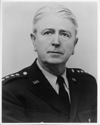
Major Albert C. Wedemeyer, a junior officer, totally unknown to the general public and little known to the upper echelon of the military establishment was selected by General George C. Marshall in the summer of 1941 for one of the most critical assignments of the Second World War. The assignment was to prepare a top secret document, later designated as the Victory Program. The purpose of the assignment was threefold: (i) make recommendations on how to rapidly mobilize American industry for war; (ii) make recommendations on how to build up our armed forces to the level necessary to fight our potential enemies, Germany and Japan; and (iii) to outline specific strategic and tactical guidelines for the defeat of these powers. It was a monumental task, and the completed document proved to be of critical importance. Why General Marshall chose Wedemeyer for this assignment, the importance of the contents of the final product, the Victory Program, and the consequences of his selection for both him and the country is a story worth telling.
In order to understand the importance of the Victory Program for America it is necessary to briefly review the world situation which necessitated Wedemeyer’s assignment. By January 1941 The United States had determined to cooperate with Great Britain, already at war with Germany, and develop a joint strategic approach to defeating Germany, in the event we were drawn into the war. Planning for a possible war was not something new. Planning for conflict, with potential enemies had been a function of the War Plans Division prior to World War I, and secret contingency plans were continually being updated to reflect new information and changes in conditions. The first serious effort to bring these plans into conformance with the conditions prevailing in 1941, took place in Washington with a meeting between representatives of Great Britain and the United States which ran from January 29 to March 29. America was not at war at this time and elaborate steps were taken to keep the meetings highly secret and to avoid any suggestion of official commitment by the United States. Admiral Stark, Chief of Naval Operations, and General Marshall appeared only briefly at the opening session, leaving the work to low and mid level planners, in an effort to avoid public notice, and insulate them from the charge, later leveled at them despite these precautions, that they had worked with the President to bring the United States into the war through the back door. Although the American representatives had made no pledge to enter the war alongside the British, as Robert Sherwood concluded, the conversations and conclusions reached “provided the highest degree of strategic preparedness that the United States…has ever had before entry into war.” [1]
Consultations between high military planners and representatives between Great Britain and the United States continued throughout 1941, both in the United States and in England. During this same period President Roosevelt continued to aid the British cause, providing escort conveys for at least as far as Iceland, gathering information on German submarine activity and providing it to the British, and continuing the Lend Lease[2] assistance.
This was the situation when Wedemeyer undertook his assignment in the summer of 1941.[3] Although he certainly was not starting a planning exercise from scratch, having the benefit of the work of his predecessors, the time frame into which he was placed to produce a document quickly made the experience unique. During that long hot summer Wedemeyer, a young 41year old major in the United States Army, along with his small staff, labored hard in cramped un air conditioned quarters in the Munitions Building Washington, D.C. where the War Plans Division had it’s offices to produce the most important document of the Second World War, the Victory Program. The Victory Program when completed outlined plans for the rapid mobilization of American industry, and the military forces for war, provided accurate estimates of what war material and equipment would be necessary to wage war, and most importantly laid out specific strategic guidelines for the defeat of our potential enemies.
The drafting of the Victory Program and sponsorship by General Marshall launched Wedemeyer’s career, and this respect he was unusual. For most officers, a staff job, either for a general grade officer or an administrative post is not the fast tract for advancement and recognition. As Forrest C. Pogue observes:
Few officers in the large aggregation of faithful and anonymous ‘Staffs’ that make the War and Navy Departments function are more faceless than those who ‘plan.’ Some of them---Marshall and Eisenhower are examples---find their way to high command, but during their period as planners they usually are overtired work-horses writing and rewriting hundreds of papers, produced often at a moment’s notice and at late hours, in which their contribution is often unrecognized. Their identifying initials, scrawled on thousands of pages of legal-sized documents, reveal little more than the amazing energy of the inscribers.[4]
It is important to remember that although a good deal of the world was already engaged in a bitter conflagration in January 1941, America was not yet involved and the overwhelming opinion of most Americans, represented by a strong isolationist faction, was that we should stay out of the war.[5] That was the reason for such secrecy. America seemed unconcerned by what was happening in Europe: the German armies held the Continent from the Atlantic coast of France to the Ukraine, the doors of Leningrad, and the shores of the Black Sea. Only Spain, Sweden, Portugal, and Switzerland remained fully outside the Axis camp, and Spain was extremely friendly to the Axis. Germany held Crete, menaced Cyprus and Malta, threatened the Middle East and Egypt, and appeared on the verge of knocking Russia out of the war. Despite these threats, the American public seemed unconcerned with European problems, and were relying on President Roosevelt’s promise to keep America out of the war. It was essential, therefore, that any project calling for a build up of arms, ammunition, and armed forces be hidden from the public.
It was President Roosevelt’s intention to assist that England in every way possible short of declaring war. The “Lend Lease Act” was only the most visible indication of Roosevelt’s intentions to aid England. The problem with Lend Lease, apart from the fact that it clearly was pushing us closer to war, was it’s haphazard system of allocation of equipment to our own and to foreign forces engaged in war with Germany. Long before Pearl Harbor, American industry was rushing to fill the urgent orders of the French, British, Chinese, and after June 1941, the Russians. So long as there was no direction to
[1] Sherwood. Roosevelt and Hopkins. New York: Harper & Brothers 1948 p. 273.
[2] Lend-Lease was the major United States aid program between 1941-1945 which enabled the United States of America to supply England, Russia, China and other countries with vast amounts of war material. The supplies were given with no requirement of repayment. The program commenced in March of 1941 and ended soon after V-J day, on September 2, 1945.
[3] Wedemeyer Reports! p. 65.
[4] Forest C. Pogue. George C. Marshall: Ordeal and Hope. New York: The Viking Press 1965. p. 122.
[5] Ibid. p. 140.
Read more >
Victory Plan Assessment Table of Contents
Read more >
|