space
space

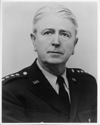
General A. C. Wedemeyer

Was he Silenced by Churchill?

  spaceYou can help with this thesis


To Asia

 Wedemeyer Ordered to Asia


Chapter IV


General Wedemeyer served in the Asia theatre twice during World War II. The first tour was divided into two parts, one part from October 1943 to the spring of 1944 as Admiral Mountbatten’s second in Command, and the second part from the spring of 1944 to the end of the war as Commander of United States forces in China as well as in the dual capacity as Chief of Staff to Generalissimo Chiang Kai-shek. As Commander of the United States forces in China he replaced General “Vinegar Joe” Stilwell who was recalled by President Roosevelt. When Wedemeyer left Mountbatten’s staff in the spring of 1944 for the second part of his first Asian tour the South East Asia Command was then split into two parts, with Mountbatten retaining command over forces in India and Burma, and China being separated and placed under Wedemeyer.

The second tour of duty in China was for only two months in 1947 as a Special Ambassador to China for the purpose of making a report and recommendations concerning America’s foreign policy toward China and Korea. This chapter will deal with the circumstances surrounding Wedemeyer’s transfer to Asia, and the almost one year Wedemeyer served as Mountbatten’s Chief of Staff. The second tour of duty will be covered in Chapter VII.
Circumstances Concerning Wedemeyer’s Transfer to Asia

And Appointment as Mountbatten’s Second in Command


When Wedemeyer  attended the Quebec conference (QUADRANT) August 17-24, 1943 he was still Chief Planner in the War Plans Division. He had no reason to think that his career was to suddenly undergo a momentous change, but he was in for a surprise. It started with a conversation with Admiral Mountbatten who approached Wedemeyer and advised him that he had talked to General Marshall and requested Wedemeyer’s assignment to New Deli. Mountbatten had just been appointed head of the new Southeast Asia Command covering China, Burma, and India.

When Mountbatten told Wedemeyer he wanted him as his second in command, Wedemeyer, taken completely unawares, told Mountbatten that he would discuss it with General Marshall.[1]  When Wedemeyer conferred with General Marshall he must have been mildly surprised to learn that the potential reassignment was already known to Marshall, who informed him that President Roosevelt was in favor of the assignment because he thought that Wedemeyer could “bring about better cooperation in a complex area.” The assignment, announced as a “promotion” would give Wedemeyer a new second star. Although Wedemeyer would have preferred a combat command or in the alternative staying on as a strategic planner for which he felt better qualified, he said he would accept any assignment that he was given. Mountbatten was a favored cousin of the King and it is unlikely that this conversation with Wedemeyer occurred in a vacuum. That would be wholly contrary to the British custom of speaking with one voice after careful consultation with the appropriate personages. It is a certainty that Mountbatten’s offer to Wedemeyer had the complete endorsement of the British delegation and likely the Prime Minister. Marshall stressed to Wedemeyer that the proposal had the “blessing” of President Roosevelt, meaning in the code of military-speak, the offer was not negotiable.[2] The significance of a proposed move of a “lowly” one star general (now two star) whose name was little known to the military community to assume a position in the Asian theatre, then considered a secondary area of the war, being a subject of discussion at such a high level would be likely to raise military eyebrows and the import would not have been missed by an astute Wedemeyer. The Asian theatre was then considered a strategic backwater, as the Allies started to close the ring on the Nazis in Europe, and General MacArthur and Admiral Nimitz pressed their advantage in the Pacific. Wedemeyer wondered what was behind the move. Subsequent events did nothing to allay Wedemeyer’s suspicions that his promotion and transfer was the product of a well orchestrated plan.

Eased Out To Asia

Wedemeyer titled chapter six of Wedemeyer Reports! published in 1958, “Eased Out to Asia”. Could this be euphuism for “Removed so as not to be an irritant to the British? The very title of the chapter suggests this scenario. You don’t fire someone like Wedemeyer simply because he might be somewhat of an irritant. He is too valuable. And his enormous contribution in drafting the Victory Program could not be overlooked. Further, he was a favorite of General Marshall.[3] How then do you remove someone like this? You do the same thing that corporate America does. You promote him “up and out”, or “ease him out”. That way it appears to the public that the person is “elevated” to a new and important position when, in reality, they are removed from the scene as not to create any more ripples. In Asia, Wedemeyer would have his hands full, but more importantly he would be away from the scene and out of the British hair. Problem solved! Wedemeyer was a good soldier and never publicly complained, and there is no known documentary evidence that he directly criticized the move while on active service. He never mentioned the subject publicly until after retirement. However, circumstantial evidence supporting British and American collusion to effect the move is persuasive.

Evidence Supporting a Plan to Move Wedemeyer to Asia

On the long trip to join Mountbatten, Wedemeyer had a good chance to think.  He wondered, was he, as well as Mountbatten being kicked upstairs? Mountbatten, like Wedemeyer was known for “getting in the hair” of the British Chief of Staff [4] by speaking his mind, often to the annoyance of his other British counterparts. Many British planners thought him a lightweight in the strategy department,[5] but his relationship to the King insulated him from direct criticism. Wedemeyer could not shake the suspicion that each was the victim of a readiness to speak their minds. [6] Wedemeyer had a long time to mull over these thoughts as he traveled to Asia, and remarked in a sort of resigned manner that he “looked forward to a vegetative state in comparison to his embattled career with the planners,”[7] but he could not shake the suspicion that he was the victim of a plot to remove him. He regarded his “promotion” as not a promotion and a deliberate effort to remove him to a “remote and relatively unimportant sphere.”[8] Later Wedemeyer was to change his view about the importance of the Asia theatre when he, one of the few,


[1] Wedemeyer Reports! p. 246-7.

[2] Ibid.

[3] When the details of the Victory Program were leaked, and splashed as headlines on the front pages of  The Washington Post and Chicago Tribune,  on December 5, 1941 (two days before Pearl Harbor)Wededmeyer was suspected as the leak. There was an FBI investigation, and but for the strong support of General Marshall, a courts martial was probable. With Marshall’s endorsement, the issue was passed, and Wedemeyer was eternally grateful.

[4] Ibid. p. 249.

[5] Ibid. p. 250.

[6] Ibid. p. 249.

[7] Ibid. p. 248.

[8] Ibid. p. 249.


Read more >


A. C. Wedemeyer