|
General Marshall’s “Failed” Mission in China
And Wedemeyer’s
“Appointment” as Ambassador to China
Chapter VI
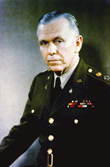
Other than give lip service to the issue, little effort had been made up to this time by the American political establishment to assist the Chinese in resolving their internal political problems. After the war, President Truman determined to make an effort. He dispatched General Marshall December 20, 1945 to China, (the war ended in August 1945) as a Special Envoy for the purpose of arranging a settlement of the dispute between the Chinese Communists and the Nationalists. The announcement generated great interest among the Nationalists as well as the American Embassy. Wedemeyer had at this time been in his new assignment in China fourteen months and had learned a good deal about the problems of working in China and the enormous difficulty of trying to reconcile the differences between the Communists and the Nationalists. He was looking forward to seeing and working with his old friend General Marshall and lending him any assistance in his endeavor but was realistic in the knowledge of the difficulties facing Marshall.
Wedemeyer met Marshall at the famed Cathay Hotel in Shanghai when he arrived. Marshall had explicit instructions from President Truman to broker a deal between the Nationalists and the Communists. He had no idea how difficult, nay, impossible his mission was. But even if he did he would not have been deterred in the least. Marshall was not a man accustomed to failure, and he did not expect failure in this effort. The great man was not used to failure, and like the President and most American political leaders thought it was simply a question of debate, compromise, and good will, somewhat like labor negations between management and the unions. Marshall arrived in China tired from his wartime duties. He made little preparation for the negotiations. Incredibly, when he was to be briefed on the situation in China prior to his departure he insisted that the entire issue be reduced to a writing on a single page.[1] This was Marshall’s wartime directive, and it might have had some utility for wartime, but to think that the titanic struggle in China could be reduced to a single page was ludicrous.
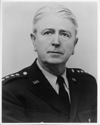
Wedemeyer knew better. He also knew the Communists would never share power. Any concessions they made would be temporary expedients only be for the purpose of infiltrating the government and undermining the opposition with the goal of a final take over. When Wedemeyer, always frank in his relations with his mentor, told him flatly that it was impossible to reconcile the two opposing forces, Marshall blew up and severely chastised Wedemeyer. he told Wedemeyer, his face flush with anger: “It is going to work! I am going to do it! And what’s more, you are going to help me do it”[2] This encounter severely damaged the long friendship which had existed between the two men. Unfortunately, the only version of what actually happened comes from Wedemeyer. Marshall never wrote or said anything about what happened even to his designated biographer Dr. Forrest Pogue.[3]
Marshall plunged into his task with enthusiasm, and was gratified to find that his first effort at reconciliation was surprisingly successful; at least it seemed so at first. He was able to obtain within the first two months an agreement initialed by both Chou En-lai and Chiang Kia-shek designating Chiang as Commander in Chief of both armies, Nationalist and Communist. This was a remarkable accomplishment, and congratulations flooded in. President Truman summoned Marshall home to report on the next stage. It was planned for Marshall to return again in April with his wife and put a ribbon on the package with a formal signing. Truman had already decided to name Marshall as the next Secretary of State, and his “victory” in China in seemingly reconciling the two opposing forces was to be his crowning achievement. Marshall at this time thought his job was virtually finished and all it needed was for someone to follow up with formalities, in military terms a “moping up operation”. Marshall, still in Washington, was expecting to return to China for the formal ceremony when he was first alerted to the fact that something had gone wrong; the Communists had reneged on their agreement and announced that were refusing to sign the formal document. This was typical of the Chinese methods.
Marshall, chagrined and more determined than ever, resolved to go back, this time with his wife, and get the matter back on tract. He arrived back in China in April 1946 and resumed his negotiations. In the interim Marshall’s standing had deteriorated with both sides. He was experiencing the effect of both Communist and Nationalist backtracking and propaganda. Among the Nationalists the rumor was circulating that Marshall was blaming them, and intended to put the heat on to make reforms in order to demonstrate to them that the Communists were “worthy partners”.[4] The Communists were reneging on their promise to recognize Chiang Kai shek as leader of both armies. Still optimistic that he would succeed in his negotiations, and evidently overlooking the earlier row with Wedemeyer, at the Cathy hotel, Marshall now approached Wedemeyer and asked him whether he had any interest in becoming the next Ambassador to China. President Truman had earlier informed Marshall that he would appoint whoever Marshall favored. Ambassador Patrick Hurley had resigned and no one had as yet been appointed to replace him. This conversation took place in Chungking just before Wedemeyer left for the United States for a minor operation sometime in May 1946. Wedemeyer, immensely pleased and believing he could make a contribution indicated that he would accept if the position was offered. Marshall radioed Truman and said Wedemeyer would accept. [5] Wedemeyer, was in the United States at the time in May 1946 for a minor operation when he heard of the Marshall radiogram, was delighted and made arrangements for the assignment in the expectation that he would be back in China shortly as Ambassador.
In the meantime Marshall back in China had come to realize that further negotiations were useless and no deal was possible between the Communists and the Nationalists. And more significantly for Wedemeyer, was the fact that his appointment as Ambassador was now placed in doubt. Marshall had had a change of heart with respect to the recommendation. Within a few short weeks, Marshall completely reversed himself and withdrew his recommendation! The disagreeable task to inform Wedemyert fell to Dean Acheson, then an assistant in the State Department. While Wedemeyer was recuperating from his surgery, in July and making preparations to assume his new position he received an urgent message from Acheson to come to his office immediately.
[1] Leonard Mosley. Hero For Our Times. New York: Hearst Books 1982. p. 367.
[2] Mosley. p. 367; Wedemeyer Reports! p. 363.
[3] Leonard Mosley. Marshall Hero For Our Time. p. 360.
[4] Mosley. p. 377.
[5] Mosley. p. 380.
Read more >
|