space
space

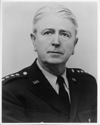
General A. C. Wedemeyer

Was he Silenced by Churchill?

  spaceYou can help with this thesis


China Commander


          Wedemeyer as China Commander Spring 1944

 To End of War

Chapter V

 Wedemeyer’s Appointment as Commander of U.S. Forces in China, and

Chiang Kai-shek’s Chief of Staff.


Wedemeyer left Mountbatten and replaced General Stilwell in the spring of 1944. He served in this capacity until the end of the war. Asia was considered during the war, but erroneously so in the context of historical review, to be a “backwater” and unimportant assignment, compared to the exciting things happening in Europe and in the Pacific. General Stilwell never got along with Chiang Kai-shek, had little use for his abilities, and considered him and his entire administration hopelessly corrupt and never lost an opportunity to belittle him. His nickname for Chiang was “peanut”, “lily livered chink” “slant –eyed snake” and worse sometimes. Stilwell and his advisors, both military and civilian State Department employees, favored the Communist forces over the Nationalists, and recommended withholding of military aid to the Nationalists, unless they cooperated by forming a coalition  military and political front with the Communists. Added to this impossible scenario was the complication of the Russians cooperating and aiding Mao with military and monetary support.
Stilwell was recalled by President Roosevelt at the direct request of Chiang Kai shek. The recall was widely reported in America and caused a furor. In order to understand the reasons for the furor is necessary to briefly summarize the military and political situation in the Asian theater at the time. During the nineteen forties, basic American goals toward China gradually shifted. When the Japanese attacked China in 1937 they quickly overran and occupied the entire southern and eastern coast.  From Pearl Harbor until V-J Day, the American government sought by every means possible to take the fullest possible advantage of China’s geography and to win the cooperation of China’s enormous manpower in a single-minded effort to defeat Japan. Defeat of Japan, with China’s help was the goal; the welfare of China was secondary. Unfortunately this uncaring attitude toward the Chinese was typical of the Western nations throughout the nineteenth and early twentieth century and had poisoned the Chinese attitude toward the Westerners.  Although the Chinese government under the Kuomintang also wanted to see Japan defeated, it was at the same time involved in a life and death struggle to survive the challenge posed by the growing strength of the Communists. The Communist’s primary goal on the other hand was the defeat Chiang Kai Shek. They gave only lip service to fighting Japanese and used arms supplied to them by America, which were intended for the fight against the Japanese, but were for the most part used against the Nationalists.  General Stillwell believed that the defeat of the Japanese with the use of Chinese troops could be expedited by use of a united front that would include the Nationalists and the Communists. President Roosevelt was in complete agreement.  Of course, both were correct, but achieving this goal was impossible. During Stilwell’s tenure he was so convinced that Chiang Kai-shek and his administration were inept and corrupt that dealing with him was a waste of time. Stillwell was against supplying Chiang Kai-shek with any arms, ammunition or military assistance unless Chiang Kai-shek agreed to join forces with Mao Tse-tung in a joint effort against the Japanese. On balance, Stillwell was inclined to favor Mao Tse-tung as an effective instrument to defeat Japan. Stilwell’s American State Department political advisers agreed with him. Further complicating the issue was the fact that the same people who favored Mao Tse-tung generally agreed that the so called Russia-China-relationship was over played. This group viewed the Chinese Communists as merely “agrarian reformers” and the Nationalist government as hopelessly doomed. Most American advisers at home believed that Chiang Kai-shek should be compelled to come to terms with the Communists. Evidently nobody urged the Chinese Communists to come to terms with the Nationalists. Typical of the American viewpoint was the view expressed by New York Times foreign correspondent Brooks Atkinson, just back from Chunking and commenting on Stilwell’s dismissal:

The decision to relieve General Stillwell represents the political triumph of a moribund, anti-democratic regime that is more concerned with maintaining its political supremacy than in driving the Japanese out of China. America is now committed … to support a regime that has become increasingly unpopular and distrusted in China, that maintains three secret police services and concentration camps for political prisoners, that stifles free speech and resists democratic forces … the Chinese communists … have good armies that are now fighting guerrilla warfare against the Japanese in North China. … The Generalissimo Regards of these armies as the chief threat to his supremacy … has made no sincere attempt to arrange at least a truce with them for the duration of the war.  … no diplomatic  genius could have overcome the Generalissimo’s basic unwillingness to risk his armies in battle with the Japanese. …[1]


Although the Times article was specifically about the relief of General Stilwell, this attitude toward the Communists and Nationalists was expressed previously numerous times.  Brooks Atkinson spoke for a sizable segment of the public. Edgar Snow, a writer who would now be described as “embedded” spent months with Mao Tse tung at the Communists headquarters, was given extraordinary access to Communist documents (carefully sifted however), allowed interviews with many senior Communists, as well as Mao himself. He wrote a glowing testimonial about the Communists, which later appeared as a huge best seller in America, Red Star Over China.[2] Agnes Smedly, another writer wrote a similar complimentary history China’s Red Army Marches.[3]

One of the few American journalists who was able to see through the mist, deception, and lies of the Communists was the former Communist, and soon to be Alger Hiss accuser in the most famous perjury trial in the history of the country, Whittaker Chambers. Chambers, now a senior editor of Time magazine was one of the few reporters who saw the menace of Mao and Communism. Chambers had the full support of the powerful Henry Luce, a strong supporter of Chiang Kai shek,  and the owner of Time, Life and Fortune, the most widely read magazines of the time, so he was able to express his views without restriction.  In an unsigned essay which appeared in Time he wrote a biting piece highly critical of Brooks Atkinson, and the other Stilwell supporters, and with uncanny foresight predicted what actually came to pass in 1949 when the Communists took over China, and shortly with Russian collaboration involved America in the Korean and later the Vietnam war:

If the rift in the U.S. Chinese relations were not quickly repaired, both China and the U.S. would be the losers. For China, the loss would be great. For the U.S. it might be catastrophic. For if Chiang Kai-shek were compelled to collaborate with Yenan [Communist headquarters in China] on Yenan’s terms, or if he were forced to lift his military blockade of the Chinese Communist area, a Communist China might soon replace Chunking. And unlike Chunking, a Communist China (with its 450 million people) would turn to Russia (with its 200


[1] New York Times. October 31, 1944. p. 1.

[2] Edgar R. Snow. Red Star Over China. New York: Grove-Atlantic 1994. Snow’s reprehensible reporting has been compared to the equally appalling famous fictitious  account of Walter Duranty in the New York Times in his reporting on the Ukrainian famine of 1923 deliberately induced by Stalin which resulted in the starvation of eight million Ukrainians. 

[3] Agnes Smedley. China’s Red Army Marches. New York: Hyperion Press. 1977.


Read more >


A. C. Wedemeyer